“Technology can enable change, but it is that culture that’s going to determine whether it works in practice.”
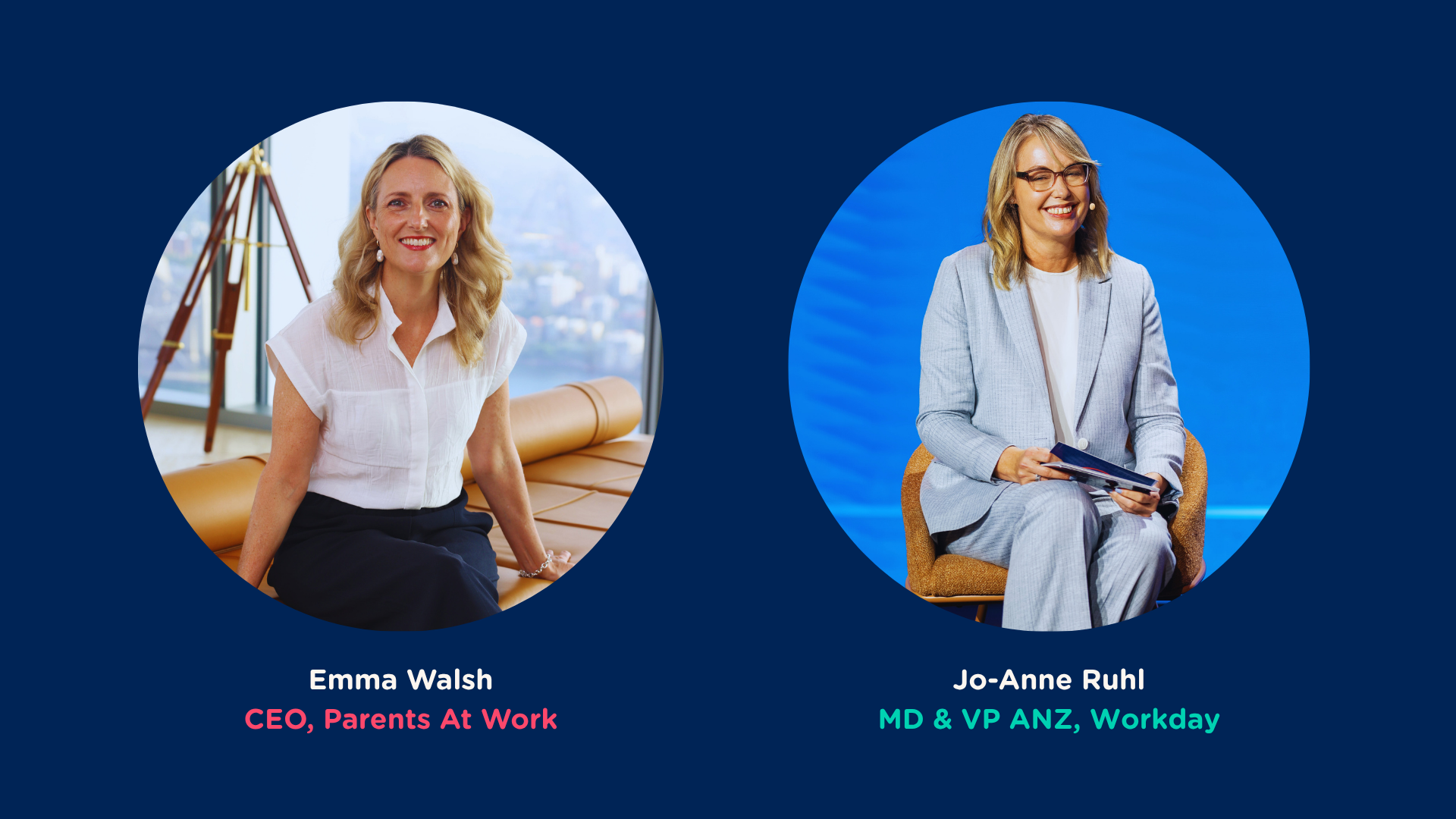
Emma Walsh
CEO, Parents At Work and Family Friendly Workplaces
As organisations accelerate their adoption of AI, conversations about productivity and efficiency are increasingly colliding with concerns about job security, changing roles and the future of work. Amid all the excitement about what technology can do, are we paying enough attention to the people whose working lives are being transformed?
In conversation with Workday’s Jo-Anne Ruhl, Parents at Work CEO Emma Walsh explores the realities of AI anxiety, the importance of employee trust and the leadership decisions that will shape how organisations navigate this change.
Their discussion raises an important question: how can employers embrace technological progress while ensuring people remain central to the decisions being made?
For employees, AI is no longer a distant prospect. It’s changing how work gets done, the skills organisations value and, in some cases, the jobs available.
Against a backdrop of redundancies and workforce restructuring, uncertainty about what comes next is understandable.
Will my role still exist? Will I have the skills to adapt? Will I be expected to deliver more with fewer resources?
For working parents and carers, these questions can carry additional weight. Job security, flexibility and career progression are closely connected to their ability to manage responsibilities beyond work.
Emma highlights, the speed and scale of AI transformation make this period of change particularly challenging.
“Trust starts with honesty,” Jo-Anne explains.
“Employees don’t expect leaders to have every answer. But they do need clarity about how AI will be used, what might change and how decisions affecting their work will be made.”
Jo-Anne emphasises the importance of involving employees early, listening to their concerns and making opportunities for learning and development visible.
Rather than treating AI transformation as something happening to employees, organisations need to make them active participants in shaping it.
AI promises to make work faster and more efficient. But what happens to the time it saves?
Will employees experience more manageable workloads, greater flexibility and opportunities to develop new skills? Or will efficiency simply translate into higher expectations and more work?
It’s a particularly relevant question for people balancing employment with parenting and caring responsibilities.
Jo-Anne challenges organisations to consider how productivity gains might be reinvested in more sustainable ways of working.
The opportunity isn’t simply to do more with less. It’s to reconsider how work is designed and who benefits when it changes.
Technology can enable transformation, but workplace culture and leadership will determine how employees experience it.
Emma and Jo-Anne discuss the importance of listening, building trust and using workforce insights to identify barriers to flexibility, development and career progression.
They also explore why leaders need to remain curious, communicate openly and acknowledge that the transition won’t be straightforward for everyone.
AI may create new opportunities, but it also brings genuine risks and difficult decisions.
The measure of responsible leadership won’t simply be how quickly organisations adopt AI, but how thoughtfully they support people through the changes it brings.
What does responsible AI transformation look like in practice? And how can employers balance innovation, business performance and the needs of their people?
Together, Emma and Jo-Anne explore AI anxiety, workforce transformation and the choices facing today’s leaders.
By registering to watch, you’ll also gain access to the companion guide, Family-friendly work in an AI-enabled world: five questions for your leadership team.