

When Mum went into hospital for what was expected to be straightforward heart surgery, none of us expected what would follow. Five weeks later, I had learnt something profound about care, family – and what workplace support really means.
Sometimes caring responsibilities build gradually.
And sometimes they arrive without warning.
For me, it was the latter.
Mum went into hospital for what was expected to be straightforward heart surgery. Instead, complications turned what should have been a relatively predictable recovery into weeks of uncertainty.
Four precarious weeks in intensive care followed.
At several points, my family and I were told to prepare for the worst.
Suddenly, I wasn’t simply balancing my full-time career and life as a mum to an almost two-year-old son. I was also a daughter facing the possibility of losing my mum.
There isn’t a handbook for moments like these.
When someone you love becomes critically ill, your priorities change instantly. Hospital visits, conversations with doctors, waiting for news and simply being there take over.
The last five weeks have been a test of emotional and psychological endurance.
And in the middle of everything happening with Mum, something else became very clear: work wasn’t another problem I had to solve.
My team at Deloitte gave me the space to completely step away from work and be present with Mum and my family.
There was no expectation that I would somehow keep everything moving.
No pressure to prove I was still committed.
And importantly, no guilt.
My work family kept me in check and reminded me to focus on what mattered.

That support meant something much bigger than flexibility.
It gave me permission to simply be a daughter when my mum needed me most.
This experience has also reminded me that caring isn’t only about the practical things we do for another person.
There is an emotional burden too.
Watching someone you love become critically ill. Living with uncertainty. Trying to remain hopeful while preparing yourself for devastating news. Supporting other family members while processing your own fear.
One of the biggest things I’ve taken from Mum’s recovery is that the hidden scars are just as important as the physical ones.
And those hidden impacts don’t simply disappear when someone returns to work.
For employers and managers, recognising that matters.
A genuinely carer-supportive workplace isn’t simply one that provides leave when someone needs to go to hospital.
It’s one that understands that people may need time, empathy and flexibility as they navigate what comes afterwards too.
I’m a full-time employee.
I’m a daughter.
And I’m also a mum and wife.
Those responsibilities don’t neatly take turns.
When a caring crisis happens, the other parts of life don’t disappear. My son still needs his mum. My family needs one another. And eventually, work needs to find its place amongst all of it.
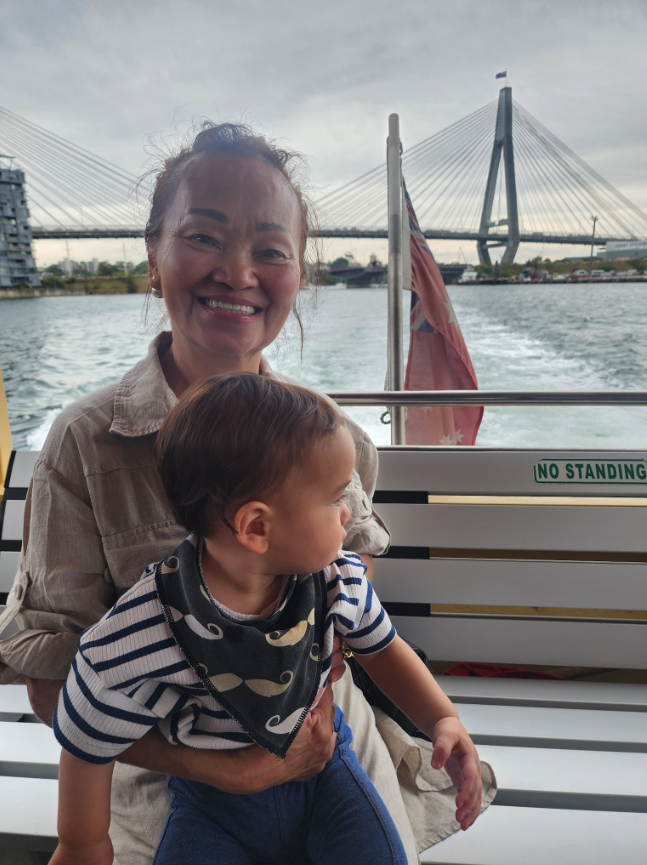
That’s why I don’t think workplace support for carers can only be designed around predictable life stages.
Care can arrive suddenly through an accident, illness or diagnosis.
And in those moments, policies matter – but how people experience those policies matters even more.
Does your manager know what to say?
Do you feel safe saying, “I need to step away”?
Can you do that without worrying about what it means for your career?
And can you trust that your workplace will allow you to focus on your family without simultaneously worrying about work?
There is a lot of discussion about creating family-friendly and carer-friendly workplaces.
Having now experienced a caring crisis firsthand, I know how much the response of a workplace can matter.
It isn’t necessarily a grand initiative.
Sometimes it’s your workplace saying:
We’ve got this. Go and be with your family.
And meaning it.
That response doesn’t happen by accident.
It comes from policies that enable flexibility and leave, managers who know how to respond with empathy, teams that can accommodate periods of changed capacity, and – perhaps most importantly – a culture where people don’t feel they have to apologise for having a life outside work.
For me, that culture meant I could be entirely present during one of the most frightening periods my family has experienced.
I will remember that.
Thankfully, after five incredibly difficult weeks in hospital, Mum is stable and on the road to a full recovery. She still has some time in hospital ahead of her, but the progress is there.
I have enormous gratitude for the ICU team who continued fighting for Mum, even when we were told several times to prepare for the worst. When our hope was disappearing, they kept working tirelessly.
I’m also incredibly grateful for the family, my husband and friends who picked me up when I felt like I might completely crumble.
And among those people was my work family.
I think that’s worth paying attention to.
Because we remember how people and workplaces respond during the moments when life becomes difficult.
We remember the manager, who was a true leader, telling us not to worry about the deliverable. (Thank you, Matt Pritchard.)
The colleague who quietly picks something up without making us feel indebted.
The organisation that trusts us to step away.
And we remember whether caring for someone we love was treated as an inconvenience – or simply as part of being human.
A carer-ready workplace doesn’t remove the difficulty of those moments.
But it can make sure work doesn’t make them harder.
Caring responsibilities are already part of every workforce and sometimes they can change overnight.
The question for organisations is whether their policies, managers, systems and culture are equipped to respond when they do.
The Carer-Ready Workplace Health Check helps identify where support is already embedded, where small changes could make a difference, and where more significant work may be required.
Take the Carer-Ready Workplace Health Check now.
Deloitte is a Founding Partner of Family Friendly Workplaces.