
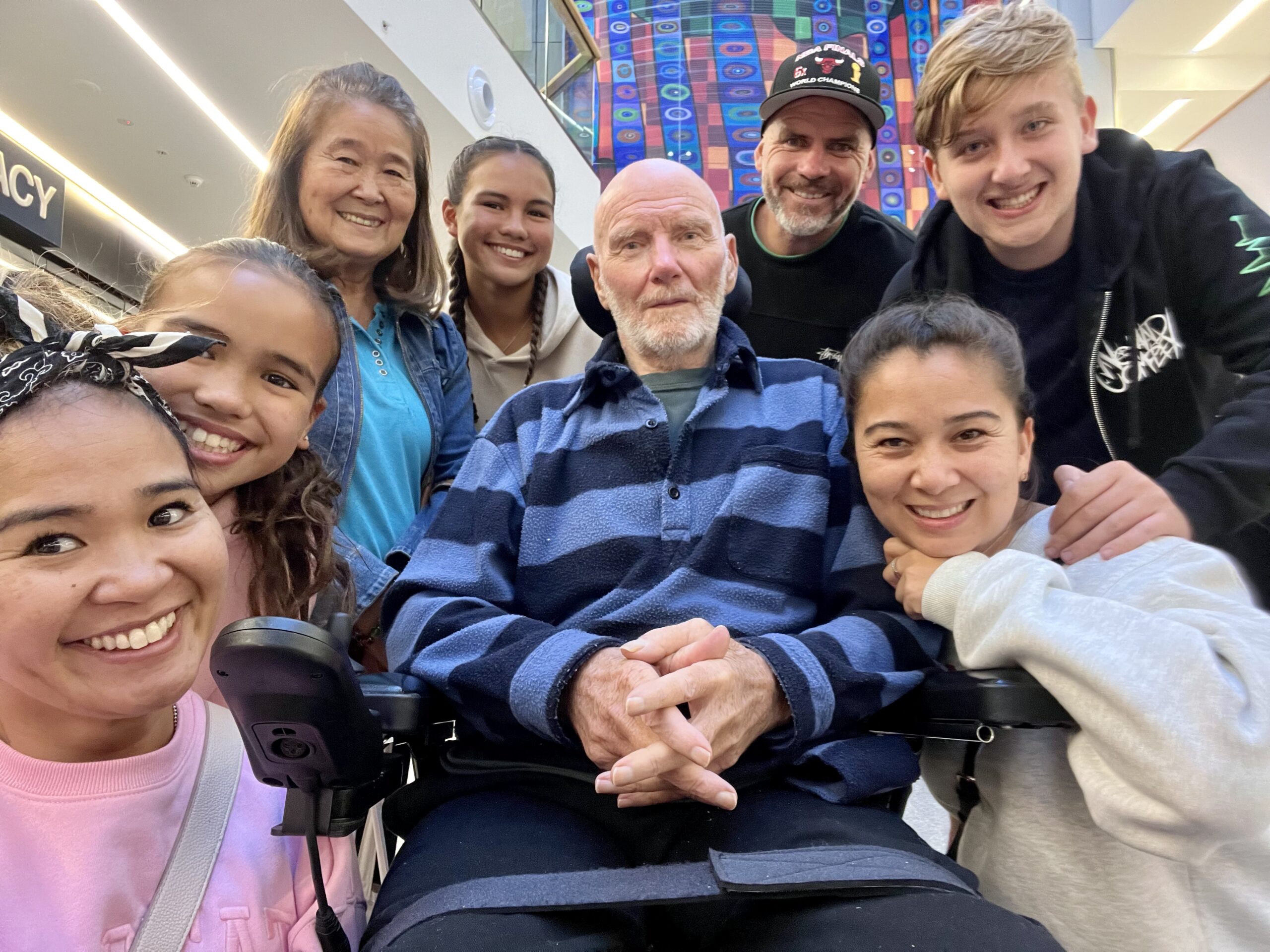
For our family, one of those moments came when my dad had an accident that left him a paraplegic at the age of 78.
Suddenly, our lives changed.
Dad spent around ten months in hospital undergoing rehabilitation and learning how to navigate an entirely different life. And while his recovery was obviously physical, we quickly realised how important the emotional and mental side of his rehabilitation would be too.
My sister and I shared the visiting days between us. Being there wasn’t simply about keeping Dad company. We were part of his support system as he came to terms with what had happened and began rebuilding his independence and confidence.
At the time, I was fortunate to be freelancing.
And suddenly, that flexibility became incredibly important.
I could take my laptop to the hospital. I could work from Dad’s bedside. I could arrange my work around visiting days and the needs of my family.
But it also meant making a very conscious career decision.
During those ten months, I chose not to pursue a full-time role.
Part of that decision was practical. I knew I needed flexibility to be there for Dad.
But there was another consideration too.
I wondered whether I could realistically start a new full-time job while also taking on significant caring responsibilities. Would a new employer understand that sometimes I needed to work from a hospital? Would there be flexibility when something changed unexpectedly? Could I be both a committed employee and a committed daughter?
Or would I have to choose?
That uncertainty influenced my career decisions.
And I suspect I’m far from alone.
For many carers, decisions about work aren’t simply about ambition, salary or the next career opportunity. They’re also about whether work can fit alongside the reality of caring for someone you love.
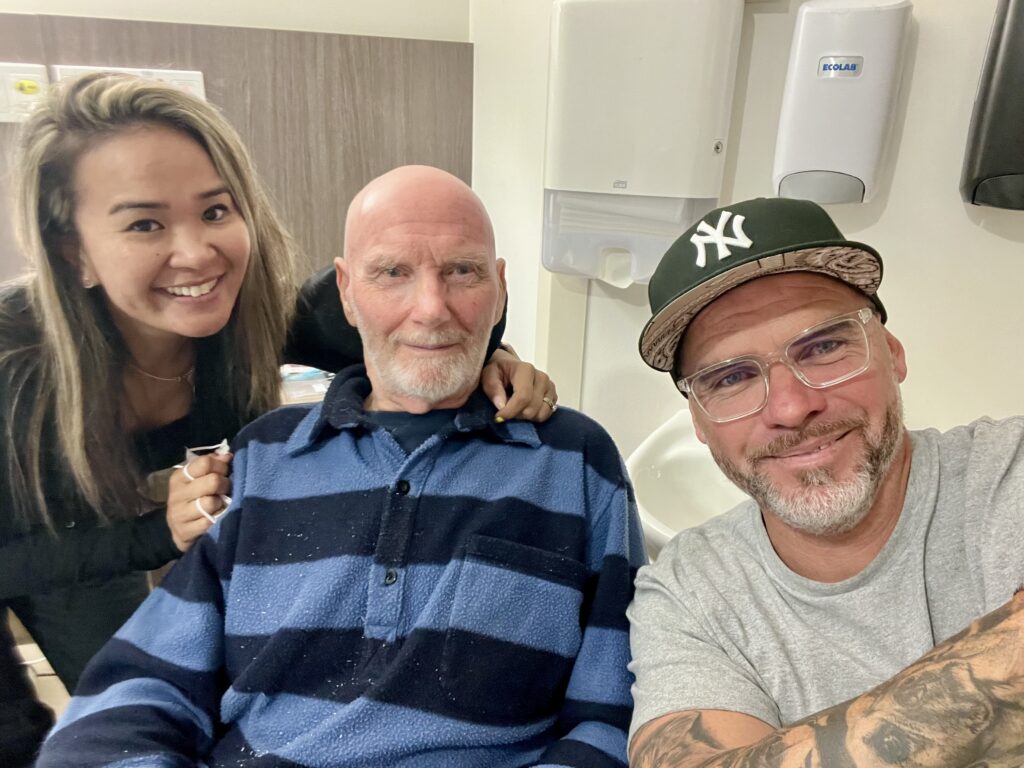
Sometimes the question isn’t “Can I do this job?”
It’s “Will this workplace make it possible for me to do this job and care for my family?”
Eventually, after ten months, we were able to bring Dad home.
His house was modified to accommodate his wheelchair and support his independence. But leaving hospital didn’t mean our caring responsibilities disappeared.
In many ways, another chapter began.
Because Dad was 78 when he had his accident, he wasn’t eligible for the NDIS. The support available through aged care does not cover the level of care he requires.
So, like many Australian families, our family fills the gap.
My sister has taken on the role of Dad’s primary full-time carer, with my mum and I supporting her and Dad.
That care exists alongside everything else in our lives, including work.
I’m also a mum to two very sporty teenagers.
So while I’m helping support my ageing parents, I’m still very much parenting too: school, sport, appointments, travel, the logistics of family life and simply being present when my children need me.
I’m part of the ‘sandwich generation’ – people simultaneously supporting ageing parents while raising children of their own.
Today, the roles and organisations I choose are intentional. Remote-first or genuinely hybrid working matters to me. Flexibility matters. Leadership and culture matter.
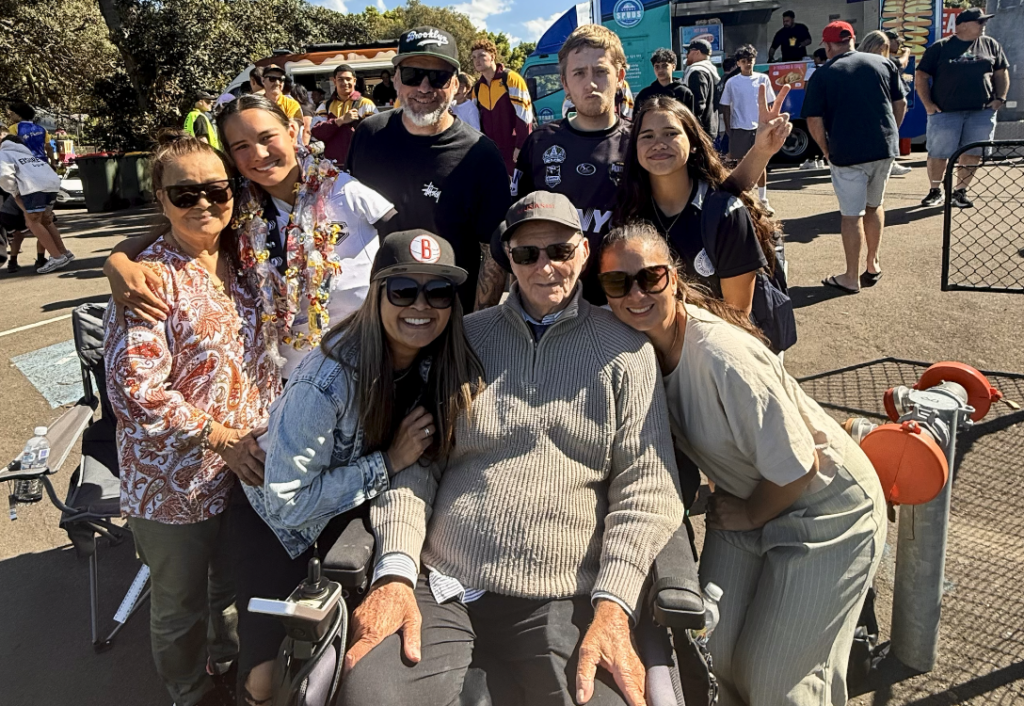
But more than anything, I want to know that caring responsibilities are recognised as a normal part of people’s lives – not an inconvenience employees need to quietly manage around their jobs.
Because our personal lives don’t stop when we walk through the office door or log onto our first meeting of the day.
Nor should people have to hide that they care for someone to be seen as committed to their career.
My experience has also taught me that supporting carers requires more than allowing someone to work from home.
It is about whether a manager feels equipped to have a conversation when an employee’s circumstances suddenly change.
Whether someone can temporarily adjust their hours without fearing it will affect their career.
Whether systems and policies recognise that care extends beyond parenting to ageing parents, partners, relatives, friends, disability, illness and injury.
And whether employees genuinely believe they can say, “I have caring responsibilities” without that changing how their commitment or potential is perceived.
Those things determine whether a policy on paper becomes something people actually feel able to use.
And importantly, flexibility isn’t only about where someone works.
It’s about having enough trust and autonomy to respond when life changes. It’s about managers being able to have human conversations. It’s about work being designed in a way that acknowledges employees have responsibilities beyond their role.
Those are the things that allow carers not simply to remain in the workforce, but to continue contributing, developing and progressing within it.
There are around three million unpaid carers in Australia – approximately one in eight of us – and most are also in paid work.
That means carers aren’t a small group sitting somewhere outside the workforce.
They’re already in our organisations.
They are our colleagues, managers and leaders.
They are parents supporting children, people caring for partners, employees helping ageing parents, and people like me who sometimes find themselves doing several of those things at once.
So perhaps the question for employers isn’t:
“Do we have carers in our workforce?”
It’s:
“Have we created a workplace where carers can continue to thrive?”
Because when people don’t have to choose between being there for someone they love and continuing to contribute meaningfully at work, everyone benefits.
And sometimes, the difference between someone stepping away from an opportunity and being able to say yes to it comes down to whether they believe their workplace will support the life that exists alongside their job.
For me, that belief now plays a very real role in the career decisions I make.
I want to do meaningful work. I want to contribute, grow and be challenged.
I’m also a daughter, a mum and a carer.
Those things shouldn’t have to compete with each other.
A workplace that understands care doesn’t lower expectations of its people. It creates the conditions that allow people to keep meeting them, while also being there for the people who depend on them.
And that, to me, is what a genuinely carer-ready workplace looks like.
National Carers Week is an opportunity for organisations to consider not simply whether they offer flexibility, but whether their policies, managers, systems and culture genuinely enable employees with caring responsibilities to participate and progress.
If you’re responsible for your organisation’s people strategy, the Family Friendly Workplaces Benchmark Assessment provides a deeper, data-backed view of your people and culture policies and practices against the Global Work + Family Standards — helping you understand where your organisation stands and where action may be needed.
Explore the Family Friendly Workplaces Benchmark Assessment.
About Junna Massey
Junna is Head of Marketing at Parents At Work. As a working mother and carer supporting her father following a life-changing accident, she brings lived experience to the conversation about how workplaces can better enable people to combine work and care.