
“My manager and team gave me a beautiful send-off, regularly checked in, showed genuine interest in how Noah and I were going, and no pressure when I needed to adjust my return date.”
Emily Potts
Parents At Work
Events & Communications Manager Emily Potts has navigated three rounds of parental leave, each one completely different. The first came with no paid leave and a forced full-time return. The third came as a Parents At Work team member, where she now helps design the programs that support other working parents through the same transition.
With three young children, supportive grandparents close by, a husband currently on parental leave, and a family-friendly workplace (that’s us!), Emily reflects on the impact of government changes, what meaningful support really looks like, and how flexibility and shared care help her be present at home and at work.
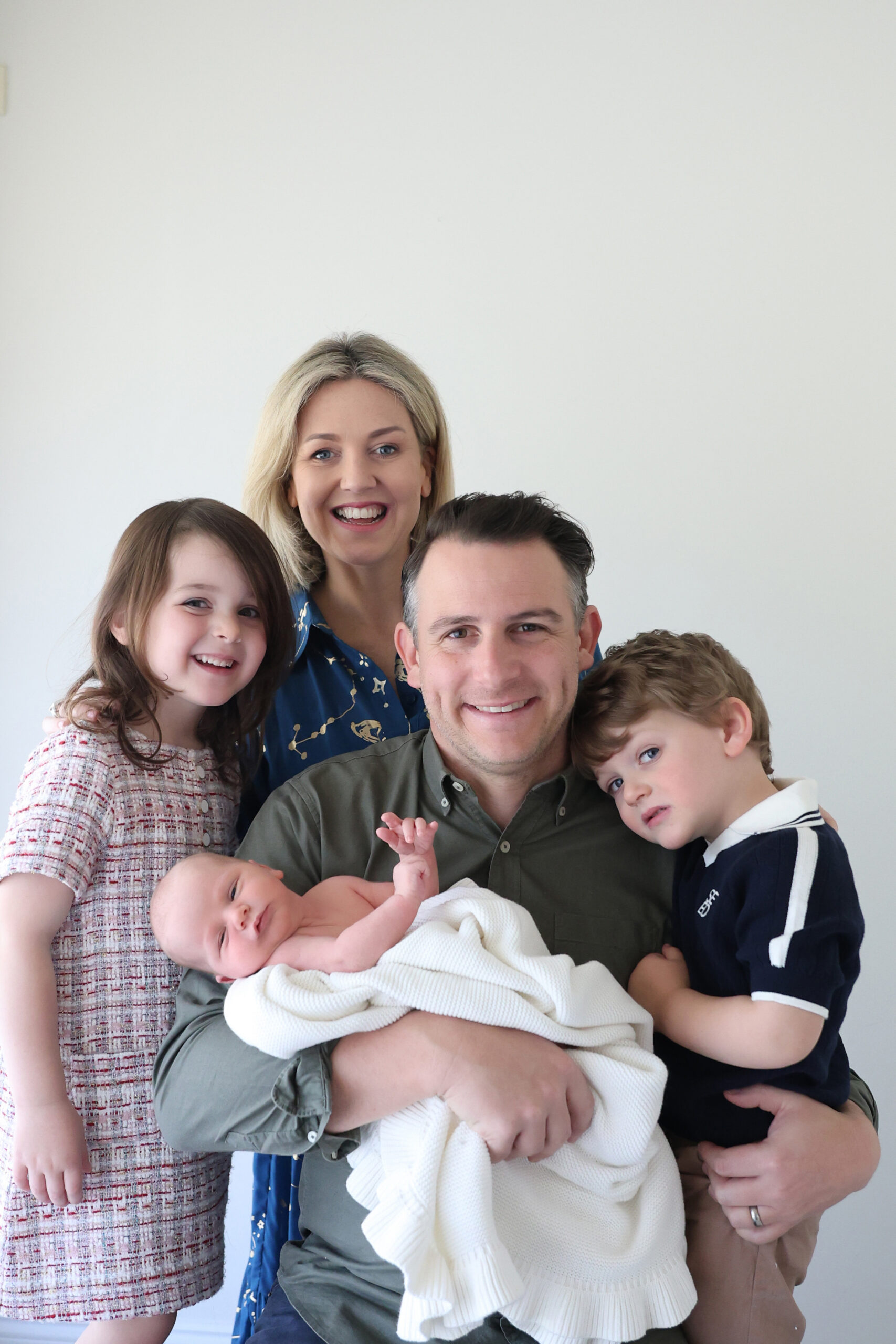
We’ve had three babies in six years, which makes for a fun, chaotic and loving household. Audrey has just turned six, Luca is four, and baby Noah turned one recently, so we’re firmly in the trenches of early childhood. All three were born in June, which makes for a very intense birthday season and a lot of cake in a short space of time.
My husband Daniel is a Teacher and Executive Team member at a nearby Secondary College, which means he has a high‑pressure role as well as occasional periods of travel for service-learning trips. We’re extremely fortunate to have strong family support on both sides: my mum lives about 20 minutes away and adores the kids, and my parents‑in‑law are the same distance in the other direction and always happy to help. My mother‑in‑law has a regular “Nonna day” that lets us keep childcare two days a week and gives the children precious time with her.
With my first baby, I had no paid parental leave from my workplace, and my employer insisted on a full‑time return, which I knew wasn’t right for me or my family. I knew I wanted the balance of part-time work while Audrey was so little, so that role was never going to be sustainable long‑term.
By the time Luca arrived in 2022, I was in a different organisation and saw some improvement, with a bit of employer support on top of government-paid parental leave, which was then around 18 weeks. My third experience with Noah has been completely different. At Parents At Work, I’ve had 12 weeks of paid parental leave from my employer, plus government PPL paid through the workplace, keeping‑in‑touch days, flexibility around my return date, and practical support like additional leave when Noah is sick and a $2,000 payment to help cover those initial childcare bills.
Across all three children, we’ve stretched leave to roughly 11 months off each time, using a mix of government support and careful budgeting, so having the added benefit of a supportive employer policy this time around has made the world of difference. With the recent increase to 26 weeks of government-paid parental leave, it allows that headspace to know you have some day–to-day costs covered in a very expensive time of life.
Life in Sydney is expensive. Mortgages or rent, groceries, nappies, childcare and hospital visits all add up quickly, so the extra six weeks of paid parental leave we received this time has made a real difference. The payment doesn’t match a full salary, but it covers many essentials and allows you to enjoy the baby bubble without as much financial stress.
Knowing we’re now at 26 paid weeks and that Australia is slowly moving towards a more generous model gives me hope that future parents might one day access a full year of government‑paid leave. When you read the research on how important the first five years are for a child’s development, confidence and sense of safety, it reinforces how critical it is to support parents to spend that time with their children.
Starting childcare with your first baby can feel daunting and emotionally overwhelming, but this time has felt easier because we know the centre and carers so well. It really does feel like a team of aunties. We talk a lot at home about the kids’ experiences, make sure they feel safe and loved there, and chose a centre that communicates clearly and consistently.
With Noah, we’re juggling weaning and childcare at the same time, so the centre has created space for me to come in, breastfeed comfortably, settle him for naps and then head back to work. Of course, once children start childcare, they catch every bug imaginable, and poor little Noah has already been sick, which throws a spanner in the works. In those moments, having a flexible, trusting workplace is everything: my manager knows that if I need to be with a sick child during the day, I’ll pick things up in the evening and deliver what’s needed once everyone is settled.
A big turning point for me was COVID, which normalised flexible work and showed employers that parents and carers can deliver outside traditional office hours. Since then, I’ve learnt to manage the juggle between home and work better by being open with my workplace and being as organised as I can be at home and at work. This means that if my best-laid plans fail, my manager can trust that I will catch up later when needed and focus on quality connection with my kids rather than perfect routines.
Daniel took the usual two weeks off around the birth, which then ran into his school holidays, and later he accessed 12 weeks of paid parental leave through his employer contract (a first in his teaching career). We talked a lot about whether he would pause work for a whole term, especially given his strong career focus, but knowing Noah is likely our last baby made it feel important for him to be fully present for this season.
He has been home for all of Term 2, helping with Audrey’s kindy drop‑offs, Luca’s sport classes, soccer coaching, making special memories with Noah and the mental load of running a house. During this time, I eased back into work two days a week and now three. That shared care has allowed us to juggle multiple logistics and school events without constantly feeling like something has to give. As he returns to work, we use simple rituals to reconnect, like the “high, low, buffalo” cards we discovered through a Work Life Wellbeing webinar. Each night we share one highlight, one low point and one funny or unexpected “buffalo” from our day. It grounds us after work, school and childcare, and helps everyone feel heard, even when the day has been chaotic.
As a Parent At Work team member, I had access to our amazing professional coaching services. Before Noah’s birth, I met with one of our expert coaches, Rebecca. She gave me practical strategies for handover and, importantly, suggested that I write an email to myself to be delivered on my return, outlining what I was proud of in my work, what I was looking forward to, and reminding myself that I’d be okay.
It sounds simple, but when you’re deep in the sleep-deprived, love-filled baby bubble – timing feeds, organising walks, playgroup and nap schedules – it’s easy to forget your professional identity and feel intimidated by the idea of going back. Coaching helped me keep perspective, design a comprehensive handover (I probably went too detailed because it feels like handing over a “work baby”), and return with a level head, supported by a workplace that genuinely wanted the transition to be sustainable.
Joining Parents At Work changed everything about my third parental leave experience. I was the first to benefit from an updated parental leave policy that included paid leave, government PPL paid through the workplace, Keeping‑In‑Touch days, flexible return dates and practical additions like extra carers’ leave and a payment towards early childcare bills.
Equally important was the emotional support. My manager and team gave me a beautiful send-off, regularly checked in and showed genuine interest in how Noah and I were going, and no pressure when I needed to adjust my return date. I came back two days a week at first, eased into a third day, and felt supported to rediscover my professional confidence whilst still feeling I am present with my beautiful bub as soon as I collect him after work.
If I could change one thing, I’d love every Australian parent to have access to equal paid parental leave for at least a year, with genuine support for shared care between parents. That would give families time to bond, recover, and establish healthy routines without the pressure to return before they’re ready.
For employers, my advice is: listen to your parents and carers, and design work with them, not around them. Offer flexible hours, phased returns, paid parental leave that recognises both primary and secondary carers, and managers who are trained to understand the realities of family life. When you do, you don’t just support parents; you build a stronger, more empathetic and loyal workforce.
Coaching helped Emily prepare for leave, stay connected, and return with confidence. Our expert coaches can do the same for your people, across every stage of the parental leave transition.